

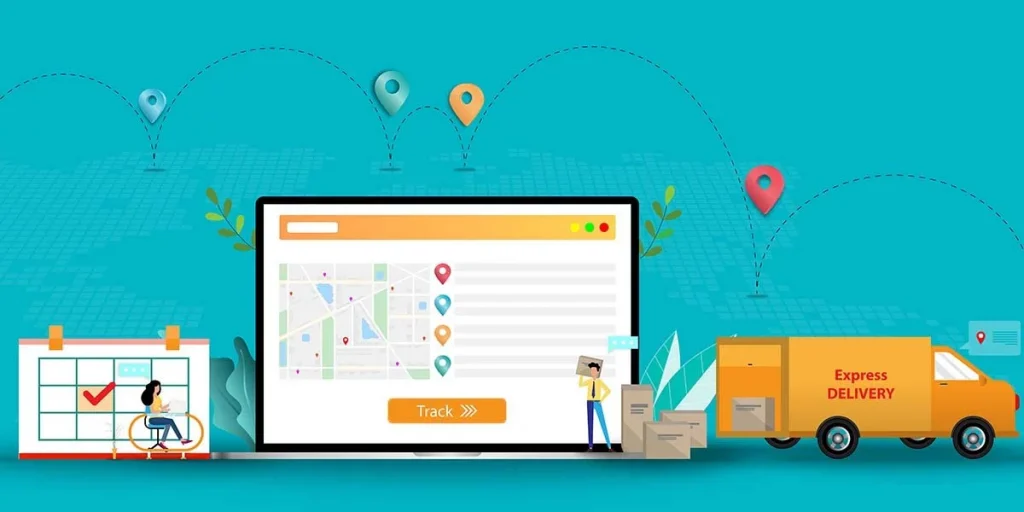
According to a recent study, the worldwide eCommerce market is projected to develop at a rate of 10.4% and generate $6.3 trillion in sales. Maximum growth is anticipated in the United States at 50% and in Europe at 47%. For optimal visibility, companies that use real-time delivery management software will make sure that their front-end and back-end integrations are set up. Businesses may enhance their delivery performance by using a delivery management system, which guarantees on-time deliveries with real-time tracking and optimised routes. The goal of a delivery manager should be to find the ideal solution that will satisfy customers and reduce delivery costs by using fewer resources.
What is Delivery Management?
The process of moving items from one location to another securely and effectively is known as delivery management. They may also have to do with fleet management, which facilitates tracking fleet movement in order to manage delivery. To supervise and handle deliveries, every organisation often employs a delivery manager or a logistics manager. Fleet operations and local deliveries might be overseen by a delivery manager. A delivery manager would primarily concentrate on areas for improvement, such as delayed orders, incorrect driver assignments, etc., while utilising delivery management software.
Key Features in Real-time Delivery Management System:
Not only will an effective delivery software enable you to deliver quickly, but it will also provide other advantages, such as:
Reduction in delivery operations costs – The optimal route planning and optimisation to allocate orders to delivery associates will be guaranteed by a delivery management system. This results in less expensive delivery operations through effective fleet delivery management.
Increased utilization and productivity – Fleet efficiency increases when operations managers can track their vehicles with ease. The company will increase fleet productivity and utilisation with the use of a fleet delivery management system, which will result in profitability.
Improve the number of pickups – With features like auto allocation, geofencing, etc., delivery associates can be utilized in an efficient way to get orders assigned and completed. These features help with order assignment and resource allocation to branches that see the highest traffic to ensure deliveries are completed within the assigned time.
Error-free dispatch and deliveries – Manual procedures are eliminated by the delivery management software. This will guarantee that operations managers won’t need to assign drivers to deliveries because the programme will take care of it. There will be little human interaction, thus shipment and delivery are guaranteed to be error-free.
Updates and monitoring in real-time – Software for managing last-mile deliveries will provide updates and real-time tracking of every delivery. A live screen will be used to monitor the whole delivery procedure. For every delivery, specific reports may be created using the data that is collected. client satisfaction is increased when delivery software with real-time monitoring provides a tracking URL to the client so they can be confident they have full sight of their purchases.
What should the best Delivery Management Software in 2024 offer its Customers?
Automated delivery scheduling
Orders are automatically distributed to delivery colleagues without the need for user involvement; this procedure is sometimes referred to as auto allocation. The manual procedure is often carried out by a delivery manager, which results in poor fleet utilisation. Drivers and orders can be assigned or ascribed to certain skill sets with the use of a delivery management system. This will guarantee smooth deliveries and the appropriate drivers are assigned to deliver orders without causing any harm.
Route optimization and real-time tracking
Geocoding and geofencing must be used in order to enhance delivery to the right address. Using last-mile delivery management software to map them would enhance delivery tracking in real-time and optimise routes. For on-time delivery, this capability will be especially helpful in tier 1 and tier 2 cities. Additionally, real-time tracking with order alerts and notifications will be sent to customers, enhancing their overall experience.
Driver Chat
Customer experience will be organisations’ main concern in 2023. It is imperative to include the driver conversation option, particularly for last-mile deliveries. Enhancing the customer experience may be achieved with driver chat software that allows users to communicate with drivers directly. In order to prevent order returns, this can also handle problems such as customers not being home when deliveries are made or notifying a change in delivery time or address.
Reports and Insights
The ability to track delivery data with ease in a bespoke report will be essential for fleet tracking and customer behaviour analysis. This aids in the planning of optimal fleet performance strategies by agile delivery managers. Custom dashboards on fleet performance, driver behaviour, route performance, etc. should be available with delivery management systems. This aids the company in organising deliveries to enhance fleet efficiency.
Seamless Integrations
Solutions for delivery management must be adaptable and able to be integrated with other resource planning programmes. Business performance may be enhanced with the use of resource planning tools including order scheduling, payments, transportation management, maps, and warehouse management.
White labeling
To assist a company in establishing its brand without having to invest in infrastructure, resources, or development procedures, white labelling is essential. This delivery management system will assist in configuring modules and APIs thanks to its cloud-based architecture, customer support, and simple customisation features.
e-PoD
One essential component of delivery software is proof of delivery. It will be useful to maintain a record of all completed deliveries. Additionally, it encourages brand loyalty, enhances the consumer delivery experience, and ensures delivery (with parcel photos and digital signature). Moreover, it aids in monitoring driver delivery KPIs.
Streamlining Logistics with Software for Last-Mile Delivery
Software for last-mile deliveries is becoming a more and more important tool for logistics firms. The most difficult and costly portion of the delivery procedure is frequently the final mile. It entails transporting goods to their intended location, which may be a business or residential region.
Software for managing last-mile deliveries assists businesses in controlling the delivery process from the shop or warehouse to the customer’s door. It has the ability to automate processes such as driver assignment, route optimisation, and real-time delivery tracking. By doing away with manual procedures and streamlining delivery routes, helps firms save expenses and save time by two times.
Enhanced visibility and control over the delivery process are two of the main advantages of software for delivery management. Real-time delivery tracking, warnings regarding problems or delays, and prompt customer service are all available to businesses. Increased client loyalty and pleasure may result from this degree of openness and communication.
Enhanced delivery efficiency is an additional advantage of last mile delivery management software. Businesses may minimise delayed deliveries, cut down on fuel usage, and lessen their carbon impact by automating operations and optimising delivery routes. Businesses may expand their delivery capacity and save money by doing this. By effectively handling several deliveries at once, they may also raise their income and delivery capacity.
Businesses may overcome last-mile delivery obstacles including traffic jams, rough terrain, and client availability with the use of some of the most sophisticated last-mile delivery management tools. Companies can assure successful and on-time delivery and swiftly adjust to changing situations by offering real-time updates and notifications.
All things considered, a last mile delivery management system is an essential part of any platform for logistics automation. Logistics organisations may enhance customer happiness, cut expenses, and boost productivity by optimising delivery routes, expediting the last leg of the delivery process, and offering real-time visibility into delivery status.
Transforming home deliveries with a delivery management system
One of the greatest industrial growth rates has been observed in the dependency of people on home delivery services for their everyday necessities. Customers demand prompt, effective, and efficient delivery of all things, including electronics and food delivery. Software for home delivery management might help in this situation.
The entire delivery process may be made more efficient with the use of logistics management software that includes home delivery management software. Tasks like route optimisation, real-time order updates, live order tracking, and driver allocation may all be automated by the program. Logistics organisations may save time, cut expenses, and increase customer satisfaction by automating these processes.
Providing clients with accurate and current delivery information is one of the main advantages of home delivery management software. When orders can be tracked in real-time and alerts are sent when products are ready for delivery, customers are happy. This degree of openness and communication fosters consumer loyalty and trust.
Logistics organisations may increase the efficiency of their deliveries with the use of home delivery management systems. Businesses may enhance sustainable delivery and save fuel use by streamlining their delivery routes. By providing real-time traffic and weather updates to drivers, they may also lower the chance of deliveries being delayed.
All things considered, home delivery management systems are essential to the logistics automation platform. Businesses may raise fleet efficiency, save operating costs, and enhance customer happiness by optimising the delivery process and offering real-time visibility into order progress.
How can a logistics delivery management system help you take control of your delivery logistics needs?
Delivery management logistics software is a crucial component of platforms for logistics automation. It lowers expenses, expedites the delivery process, and raises customer satisfaction.
Businesses may control the whole delivery process, from receiving an order to the final delivery, with the use of logistics delivery management software. Order dispatching, driver assignment, real-time delivery tracking, and delivery status updates are just a few of the processes it can automate. Doing away with manual procedures and streamlining delivery routes, may help businesses cut expenses and save time.
The ability to see and control the delivery process better is one of the main advantages of logistics delivery management software. Real-time delivery tracking, warnings regarding problems or delays, and prompt customer service are all available to businesses. Increased client loyalty and pleasure may result from this degree of openness and communication.
Enhanced delivery efficiency is an additional advantage of logistics delivery software. Businesses may minimise delayed deliveries, minimise fuel usage, and lessen their carbon footprint by implementing sophisticated route optimisation. By effectively handling several order deliveries at once, they may also enhance their fleet delivery capability.


