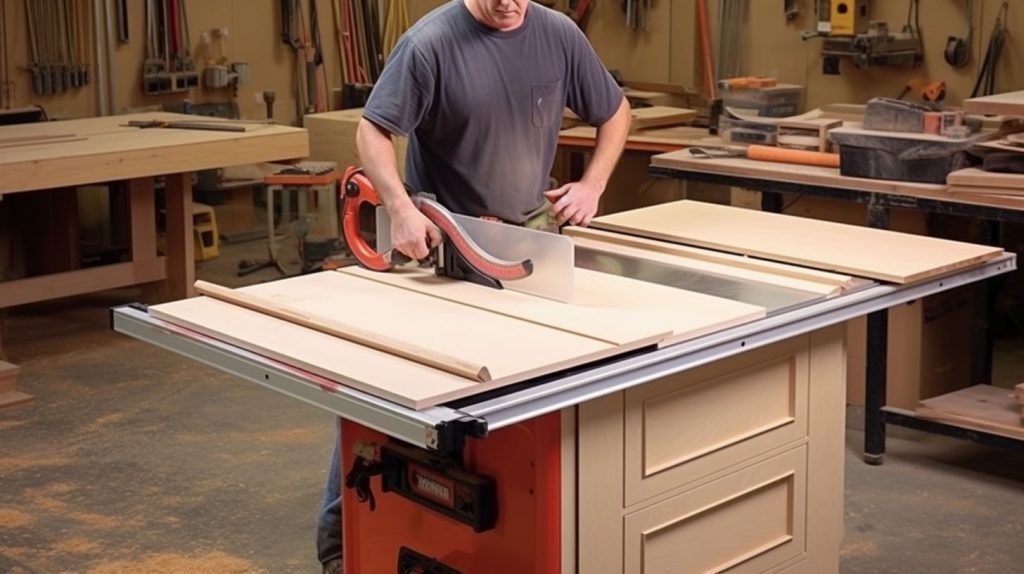
Did you know that making your own cabinet doors can save you up to 50% compared to buying pre-made ones? If you have a table saw and some basic woodworking skills, you can create custom cabinet doors that perfectly fit your style and needs. In this article, we will guide you through the process of making cabinet doors using a table saw, step by step.
Firstly, we will help you select the right materials for your project to ensure durability and aesthetic appeal. Then, we will show you how to accurately measure your cabinets for a perfect fit. Once all the measurements are taken, it’s time to bring out the table saw and cut the door panels precisely. We’ll provide detailed instructions on how to make clean cuts with ease.
Finally, we will walk you through assembling and installing the finished cabinet doors. With our expert guidance, you’ll be able to transform your kitchen or any other space in no time. Get ready to unleash your creativity and add a personal touch to your home by mastering the art of making cabinet doors with a table saw!
Selecting the Right Materials for Cabinet Doors
You’ll want to choose the right materials for your cabinet doors, like strong and durable plywood or solid wood, ensuring a sturdy and long-lasting result. When selecting the best materials, consider factors such as durability, aesthetics, and budget.
Plywood is a popular choice due to its strength and affordability. It comes in different grades, so make sure to choose one that suits your needs. Solid wood offers a classic and high-end look but can be more expensive.
Once you’ve chosen the material for your cabinet doors, it’s time to think about the finishing touches. Choosing the best finish will not only protect the wood but also enhance its appearance. Options include paint, stain, or clear coat finishes. Consider the style of your kitchen or space where the cabinets will be installed when deciding on a finish.
Another important aspect of cabinet door construction is selecting the right hinges. Different types of hinges are available depending on how you want your doors to open and close. Some common options include concealed hinges for a sleek look or butt hinges for traditional-style cabinets.
By carefully considering these factors when choosing materials for your cabinet doors – including selecting the best finish and finding appropriate hinges – you can ensure that they not only function properly but also add beauty to your space.
Taking Accurate Measurements for a Perfect Fit
To ensure a flawless fit, start by precisely measuring the dimensions needed for your new cabinet door. Accurate measurements are crucial to avoid any gaps or misalignment when installing the door. Here are some measuring techniques to help you get it right:
Measurement
Description
Height
Measure from the top to bottom of the cabinet opening. Take three measurements: at the left side, center, and right side. Use the smallest measurement as your height.
Width
Measure from left to right across the cabinet opening. Again, take three measurements: at the top, middle, and bottom. Use the smallest measurement as your width.
Depth
Measure how far into the cabinet you want your door to sit. This will determine how much overlap there will be.
After taking these measurements, make sure to adjust for any hardware that will be added to the door, such as hinges or handles. Consider their size and placement so they won’t interfere with each other or cause any issues when opening or closing the door.
By following these measuring techniques and adjusting for hardware, you can ensure a perfect fit for your new cabinet doors. Accuracy is key in achieving professional-looking results that will enhance both functionality and aesthetics in your kitchen or any other space where cabinets are installed.
Using a Table Saw to Cut the Door Panels
Effortlessly slice through the door panels using a powerful tool like a table saw, allowing for precise and smooth cuts that’ll leave you feeling accomplished and empowered.
When working with a table saw, it’s important to prioritize safety. Always wear protective eyewear, gloves, and long sleeves to prevent any potential injuries. Additionally, make sure the table saw is properly set up and adjusted before starting your project.
There are different types of table saws available on the market. The most common ones include contractor saws, cabinet saws, and hybrid saws. Contractor saws are portable and suitable for small woodworking projects. Cabinet saws are heavier and more durable, making them ideal for professional use or larger-scale projects. Hybrid saws combine features from both contractor and cabinet saws.
To begin cutting the door panels on a table saw, mark the measurements carefully on each panel. Use a straight edge or T-square to ensure accuracy. Set the blade height according to your desired depth of cut. Make sure that the fence is parallel to the blade for straight cuts.
With all safety precautions in place, turn on the table saw and slowly push each panel through the blade using a push stick or push block for added control. Take your time and let the machine do its work.
Using a table saw can be an efficient way to cut door panels with precision and ease. Just remember to prioritize safety at all times by wearing protective gear and taking necessary precautions when operating this powerful tool.
Assembling and Installing the Cabinet Doors
Once you’ve conquered the art of cutting the door panels, it’s time to put your puzzle-solving skills to work as you assemble and install the final pieces of the cabinet doors, bringing them together like a perfectly fitting jigsaw.
Here are some assembling techniques to help you along the way:
Start by laying out all the door components in a clean and organized workspace. This will make it easier to visualize how they fit together.
Apply wood glue to the edges of each panel before joining them. This will ensure a strong bond and prevent any gaps from forming.
Use clamps or weights to hold the panels together while the glue dries. This will help maintain alignment and create a seamless look.
Once the glue has dried, sand down any rough edges or imperfections for a smooth finish.
Finally, attach your chosen hinges to each door using screws. Make sure to adjust them properly so that they open and close smoothly.
By following these assembling techniques and adjusting your door hinges correctly, you’ll have beautiful cabinet doors that not only enhance the overall aesthetic but also function flawlessly.
So go ahead and enjoy your newly created masterpiece!
Conclusion
So, there you have it, folks. You’ve learned all the ins and outs of making cabinet doors with a table saw. Now you can impress your friends and family with your newfound woodworking skills.
But let’s be real here, who needs cabinet doors anyway? Who needs privacy or organization in their lives? Embrace the chaos, my friend! Scatter those pots and pans around like confetti and revel in the madness. Because who needs neatness when you have anarchy?