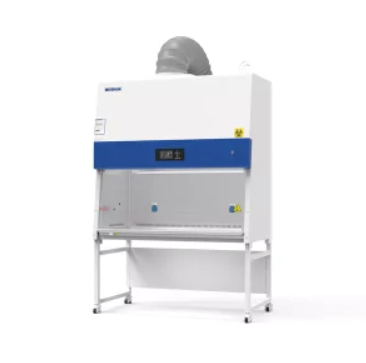
Choosing the right biosafety cabinet class starts with understanding what you need to protect. You may need protection for personnel, samples, the surrounding laboratory, or a combination of these. By comparing cabinet classes according to containment, airflow, filtration, and application, you can narrow your options and select equipment that fits your laboratory workflow.
Understand What Biosafety Cabinet Classes Mean
Biosafety cabinets are commonly grouped into Class I, Class II, and Class III designs. Each class uses a different approach to airflow and containment, so you should not select one based only on cabinet size or filtration.
Class I: A Class I cabinet protects personnel and the environment from potentially hazardous aerosols. Air is drawn into the work area and exhausted through filtration. However, it does not provide product protection because room air can enter the work zone.
Class II: A Class II cabinet provides personnel, environmental, and product protection when operated correctly. It uses controlled airflow and HEPA filtration to create a cleaner working environment. Class II cabinets are widely used for microbiological and cell culture procedures.
Class III: A Class III cabinet provides the highest level of containment. The work area is fully enclosed, and you typically manipulate materials through sealed glove ports. This design is intended for applications involving highly hazardous biological materials where maximum containment is required.
Understanding these differences gives you a practical starting point before comparing individual models.
Compare Protection Requirements First
Before choosing a cabinet, identify exactly what your application requires you to protect.
If your primary concern is personnel and environmental protection during work that does not require product protection, a Class I design may be appropriate. If you need to protect both your samples and laboratory personnel, you will generally need to consider a Class II cabinet.
For procedures involving materials requiring maximum containment, a Class III cabinet may be considered. You should also review your organization’s biosafety procedures, risk assessment, facility requirements, and applicable standards before making a final selection.
The key is to match cabinet class to the actual hazard rather than choosing equipment based on general laboratory use.
Compare Class II Biosafety Cabinet Types
If your application points toward Class II equipment, you still have several configurations to compare. Class II cabinets are commonly divided into types such as A1, A2, B1, and B2, with differences in airflow and exhaust arrangements.
For many routine microbiological applications, a Class II Type A2 cabinet can provide a practical combination of personnel, product, and environmental protection. However, applications involving volatile toxic chemicals or radionuclides may require a different configuration and dedicated exhaust arrangement.
You should therefore consider:
- The biological hazards involved
- Whether chemicals or radionuclides are used
- Required exhaust arrangements
- Facility ventilation capabilities
- Workload and equipment placement
- Certification and maintenance requirements
Do not assume that every Class II cabinet can support every application. The substances used in your workflow can significantly affect the appropriate cabinet configuration.
Evaluate Airflow, Filtration, and Workspace
Once you identify the appropriate class, compare the technical features that affect everyday performance.
Look at the cabinet’s airflow design and how it maintains containment around the work area. HEPA filtration is another important factor because it helps remove airborne particles from the appropriate airflow stream. You should also consider the usable work surface, sash design, visibility, noise, lighting, and ergonomics.
If several users will operate the cabinet, choose a configuration that supports consistent working practices. A cabinet that is technically suitable but difficult to use can create workflow problems and encourage poor operating habits.
You should also leave enough surrounding space for installation, servicing, and airflow requirements. Always follow the manufacturer’s installation instructions rather than treating the cabinet as ordinary laboratory furniture.
Match the Cabinet to Your Laboratory Workflow
Your daily procedures should influence the final decision. Consider what you handle, how frequently you work with it, and what equipment must remain inside the cabinet.
For example, routine cell culture work may require strong product protection alongside personnel protection. More specialized procedures may introduce chemical or radiological considerations that affect cabinet selection.
Make a simple application checklist before purchasing:
- Identify the biological hazards.
- Determine who and what needs protection.
- Identify chemicals or radionuclides used inside the cabinet.
- Check your laboratory’s ventilation capabilities.
- Determine the required cabinet class and type.
- Compare dimensions, airflow, filtration, and usability.
- Confirm certification, installation, and service requirements.
This process helps you avoid selecting equipment based solely on price or appearance.
Choose Biosafety Equipment With Long-Term Use in Mind
The right cabinet should support safe and repeatable work over its service life. You should consider certification requirements, filter maintenance, accessibility for servicing, replacement parts, and manufacturer support before making your decision.
When comparing Biosafety Cabinet for laboratory containment and contamination control, focus on how each option fits your specific procedures rather than simply comparing specifications. A well-matched cabinet can make routine work more controlled while supporting consistent laboratory practices.
You can explore laboratory containment solutions from Global Lab Supply for biosafety and laboratory equipment and review its selection of Biosafety Cabinets for personnel, product, and environmental protection.
If you are uncertain about the appropriate configuration, review your risk assessment and facility requirements first. You can also Contact us today for guidance on selecting laboratory biosafety equipment based on your application.
Frequently Asked Questions
What is the main difference between Class I and Class II biosafety cabinets?
Class I cabinets primarily provide personnel and environmental protection, while Class II cabinets can provide personnel, environmental, and product protection through controlled airflow and filtration.
When should you consider a Class III biosafety cabinet?
You should consider Class III equipment when your work requires a highly enclosed containment system and maximum protection against exposure to hazardous biological materials.
Is a Class II cabinet suitable for every laboratory application?
No. Class II cabinets have different configurations and exhaust requirements. Your biological materials, chemicals, radionuclides, workflow, and facility ventilation should determine the appropriate configuration.
Why is airflow important when comparing biosafety cabinets?
Airflow helps maintain containment and, in applicable cabinet designs, protects the work product from contamination. You should compare airflow characteristics with the cabinet’s intended application and certification requirements.
What should you check before purchasing a biosafety cabinet?
You should check the required protection level, cabinet class and type, airflow, filtration, workspace, installation requirements, certification, maintenance needs, and compatibility with your laboratory procedures.