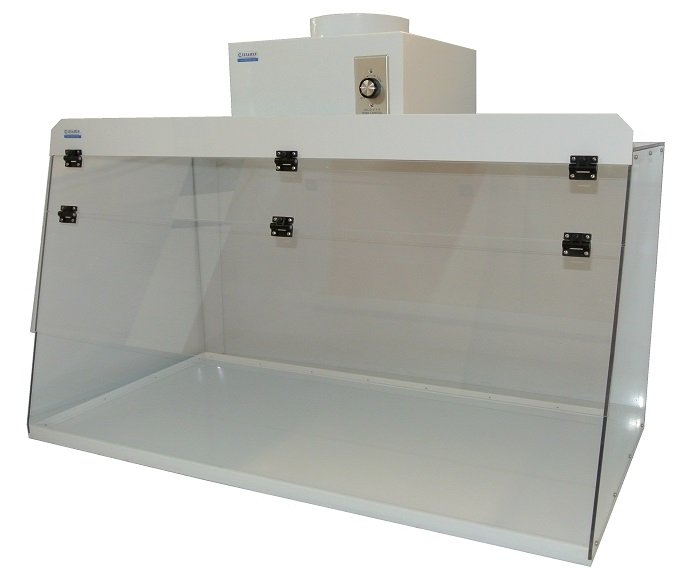
Selecting the right chemical fume hood for solvent evaporation is essential when you handle volatile liquids, organic solvents, and chemical mixtures in your laboratory. During evaporation, solvents release vapors that can create inhalation hazards, increase fire risks, and affect indoor air quality. Your fume hood should provide effective vapor containment while supporting the equipment, operating conditions, and evaporation volume required by your process.
Before purchasing a laboratory fume hood, evaluate the solvent properties, evaporation rate, ventilation capacity, construction materials, and safety requirements. A properly selected system helps you maintain a controlled working environment and supports consistent laboratory operations.
1. Identify the Solvents Used in Your Evaporation Process
Start by identifying every solvent you plan to evaporate. Different solvents produce different vapor concentrations and present varying health, chemical compatibility, and fire hazards.
Common laboratory solvents include:
- Acetone
- Ethanol
- Methanol
- Isopropyl alcohol
- Hexane
- Toluene
- Ethyl acetate
- Acetonitrile
Review each solvent’s Safety Data Sheet (SDS), particularly its hazard classification, vapor pressure, flash point, and recommended exposure controls.
If you evaporate highly volatile or flammable solvents, you need a suitable exhaust system and a hood configuration designed for the associated hazards. Do not assume that one hood is appropriate for every solvent or evaporation process.
2. Choose Between Ducted and Ductless Fume Hoods
Your ventilation configuration directly affects how solvent vapors are managed.
Ducted chemical fume hoods
Ducted systems capture contaminated air and discharge it through an appropriately designed exhaust system. They are often suitable for regular solvent evaporation, particularly when your process releases significant quantities of hazardous or flammable vapors.
Consider the exhaust capacity, duct materials, discharge location, and compatibility with the chemicals involved.
Ductless chemical fume hoods
Ductless systems use specialized filters to capture selected chemical vapors before returning filtered air to the laboratory. Their suitability depends on the specific solvent, filter technology, concentration, humidity, and expected operating duration.
Do not select a ductless hood simply because it uses activated carbon filters. Confirm that the manufacturer approves the exact solvents and that filter breakthrough can be monitored reliably.
For continuous or high-volume solvent evaporation, consult your laboratory safety professional before selecting a recirculating system.
3. Evaluate Airflow and Vapor Containment
Effective airflow is one of the most important considerations when selecting a chemical fume hood.
Your hood must capture solvent vapors without allowing them to escape into the surrounding laboratory. Evaluate the following specifications:
Face velocity: Check the manufacturer’s recommended operating range and ensure the installed hood meets the applicable performance requirements.
Airflow stability: Confirm that the ventilation system maintains suitable airflow during normal laboratory operations.
Baffle arrangement: Properly positioned baffles help distribute airflow throughout the hood.
Airflow monitoring: Select a system with an appropriate airflow indicator or alarm.
Sash design: Choose a sash that allows you to maintain the recommended operating opening.
Avoid selecting equipment based only on a high airflow rating. Excessive or turbulent airflow can also interfere with containment. Request documented performance testing under the intended installation conditions.
4. Check Chemical Compatibility of Construction Materials
Solvent evaporation exposes the hood interior to chemical vapors, occasional splashes, and potentially corrosive residues. Therefore, construction materials should match your application.
Evaluate these components:
Interior lining: Select chemically compatible surfaces that resist the solvents used in your process.
Work surface: Choose a durable, nonabsorbent material suitable for expected chemical exposure.
Exhaust components: Confirm that ducts, fans, and connections are compatible with the solvent vapors.
Seals and gaskets: Check their resistance to chemical exposure and operating temperatures.
Structural components: Consider corrosion resistance and long-term durability.
For laboratories handling different solvent mixtures, request chemical compatibility documentation from the manufacturer before finalizing your purchase.
5. Consider Fire and Explosion Safety
Many organic solvents release flammable vapors. Your chemical fume hood selection must therefore account for ignition sources, electrical equipment, and the potential formation of hazardous vapor concentrations.
Before installation, evaluate:
- Solvent flash points and vapor characteristics.
- Electrical equipment suitability for the classified installation environment, where applicable.
- Potential ignition sources inside and around the hood.
- Exhaust fan and motor suitability.
- Grounding and bonding requirements where applicable.
- Emergency procedures and fire protection provisions.
Do not assume that a standard chemical fume hood is explosion-proof. If your evaporation process can create combustible atmospheres, obtain a process-specific hazard assessment and confirm the required equipment design with qualified safety and engineering professionals.
6. Calculate the Required Hood Size and Working Capacity
Your hood should accommodate the complete evaporation setup without restricting airflow.
Measure the dimensions of your evaporation apparatus, including rotary evaporators, solvent containers, condensers, heating equipment, and supporting accessories.
Consider these questions:
- How many solvent containers will you use simultaneously?
- What is the maximum equipment footprint?
- Will you need additional space for condensers or collection vessels?
- How frequently will you perform evaporation?
- Will your process expand in the future?
Choose a hood with sufficient internal working space while maintaining unobstructed airflow. Avoid overcrowding the work surface because equipment can interfere with the hood’s containment performance.
7. Review Exhaust Capacity and Laboratory Infrastructure
Even a well-designed hood cannot perform effectively without a compatible building ventilation system.
Before purchasing, assess your laboratory’s available exhaust capacity, makeup air supply, duct routing, and building pressure balance.
Ask your supplier or ventilation engineer to evaluate whether the existing infrastructure can support the proposed hood. Consider whether additional exhaust capacity, duct modifications, or electrical upgrades are necessary.
You should also review applicable local regulations, laboratory ventilation standards, fire codes, and manufacturer installation requirements.
8. Prioritize Maintenance, Testing, and Long-Term Reliability
Solvent evaporation requires dependable ventilation over repeated operating cycles. Select a hood that allows straightforward inspection, cleaning, maintenance, and performance verification.
Look for:
- Accessible airflow monitoring components.
- Durable internal surfaces.
- Reliable sash mechanisms.
- Serviceable exhaust connections.
- Manufacturer documentation and maintenance support.
- Availability of replacement components.
Schedule periodic inspections and performance testing according to applicable requirements. Train laboratory personnel to recognize airflow alarms and stop work if the hood is not operating correctly.
9. Select a Chemical Fume Hood That Matches Your Application
Your final selection should balance chemical compatibility, vapor containment, fire safety, working capacity, and installation requirements.
Explore the chemical fume hood solutions for laboratory solvent handling to evaluate equipment options for your laboratory.
At CleaTech LLC, you can explore laboratory equipment solutions for different research and industrial applications. Before making your decision, compare technical specifications and discuss your solvent types, evaporation volumes, and ventilation requirements with an experienced equipment supplier.
A carefully selected chemical fume hood supports safer solvent handling, efficient laboratory workflows, and dependable long-term performance.
Frequently Asked Questions
Which chemical fume hood is best for solvent evaporation?
A properly designed ducted chemical fume hood is often preferred for routine or higher-volume hazardous solvent evaporation. Your final choice depends on solvent properties, vapor generation, exhaust requirements, and the laboratory’s safety assessment.
Can you use a ductless fume hood for organic solvent evaporation?
You can use a ductless hood only when its manufacturer confirms compatibility with the specific solvents and operating conditions. Filter capacity, breakthrough monitoring, and institutional approval must also be considered.
Why is airflow important during solvent evaporation?
Airflow helps capture and remove hazardous vapors from the working area. Insufficient or unstable airflow can compromise containment and increase the possibility of worker exposure.
What materials should you consider for a chemical fume hood?
Consider chemically compatible interior liners, work surfaces, seals, gaskets, ducts, and exhaust components. Select materials based on the solvents, concentrations, and operating temperatures involved.
How do you maintain a chemical fume hood used for solvent evaporation?
Keep the work surface clean, avoid blocking baffles, verify airflow indicators, inspect the sash, and arrange periodic performance testing. Never use a malfunctioning hood for hazardous solvent handling.
Can a chemical fume hood be used to evaporate chemical waste?
No. A chemical fume hood should not be used as a disposal method for hazardous waste. Collect and manage waste solvents through approved hazardous waste procedures.
Final Thoughts
Choosing the right chemical fume hood for solvent evaporation requires more than comparing dimensions and prices. You must understand your solvent hazards, ventilation requirements, construction materials, and operating conditions. By evaluating these factors before purchasing, you can select equipment that supports effective vapor containment and safer laboratory operations.
For application-specific equipment guidance, Contact us today to discuss your laboratory fume hood requirements.